Massumi: what does anthropocentrism do?
“The accusation of anthropomorphism is launched in the name of respecting difference. You’re talking about animal thought? Animal affects and emotions? Animal desire? Animal creativity? Animal subjectivity even? Projection, pure difference-denying projection. Nothing but a lack of respect for the radical differences between modes of existence— yet another act of anthropocentric domination erasing the difference of the “other.” Animal politics does not set much store by such critiques. They are still laboring within the traditional logic according to which the only alternative to mutual exclusion is undifferentiation, in this case in the guise of a putative projective confusion. This alternative is only hardened by the notion of “radical” difference. Such critiques do not take into account the possibility of a logic of ten- dencies that interpenetrate without blurring. Neither do they take into account the movement of transindividuation creating ever more differ- ences, in an animal parade of vital variations. They know nothing of the reciprocal presupposition of modes of existence in the ceaselessly self- differentiating current of life.” (50-1)
Creatureesque: think in terms of tendencies
“Tendencies are differentiated by the poles between which their vector stretches: they are defined by their limits. The logic of mutual inclusion does not prioritarily concern itself with forms, or objects, or even subjects. Tendency is what feeds it. It is in the interlacing of tendential movements that forms, objects, and subjects are constituted, in perpetual emergence and continual variation. As Bergson emphasizes, tendencies are not dis- tinguished from each other in the mutually exclusive manner that forms, objects, and subjects distinguish themselves. Tendencies can combine forces without mutually excluding each other. In fact, it is their vocation to mix. Even though they are logically distinguishable by their polarity and orientation, they never occur naturally alone. Every situation always acti- vates a mix of them. In every situation, they co-occur without coalescing. They resonate or interfere with each other, stunt or prolong each other, sap or boost each other, capture each other or enter into mutually beneficial symbiosis.”
“Tendencies are nothing other than the creative movement of the mental pole of nature, “creative” because from their dynamic interpenetrations emerge qualitative variations. Tendencies, in their “mental” movement, consti- tute subjectivities-without-a-subject: sheer doings, with no doer behind them—with nothing behind them but their own forward momentum.” (46)
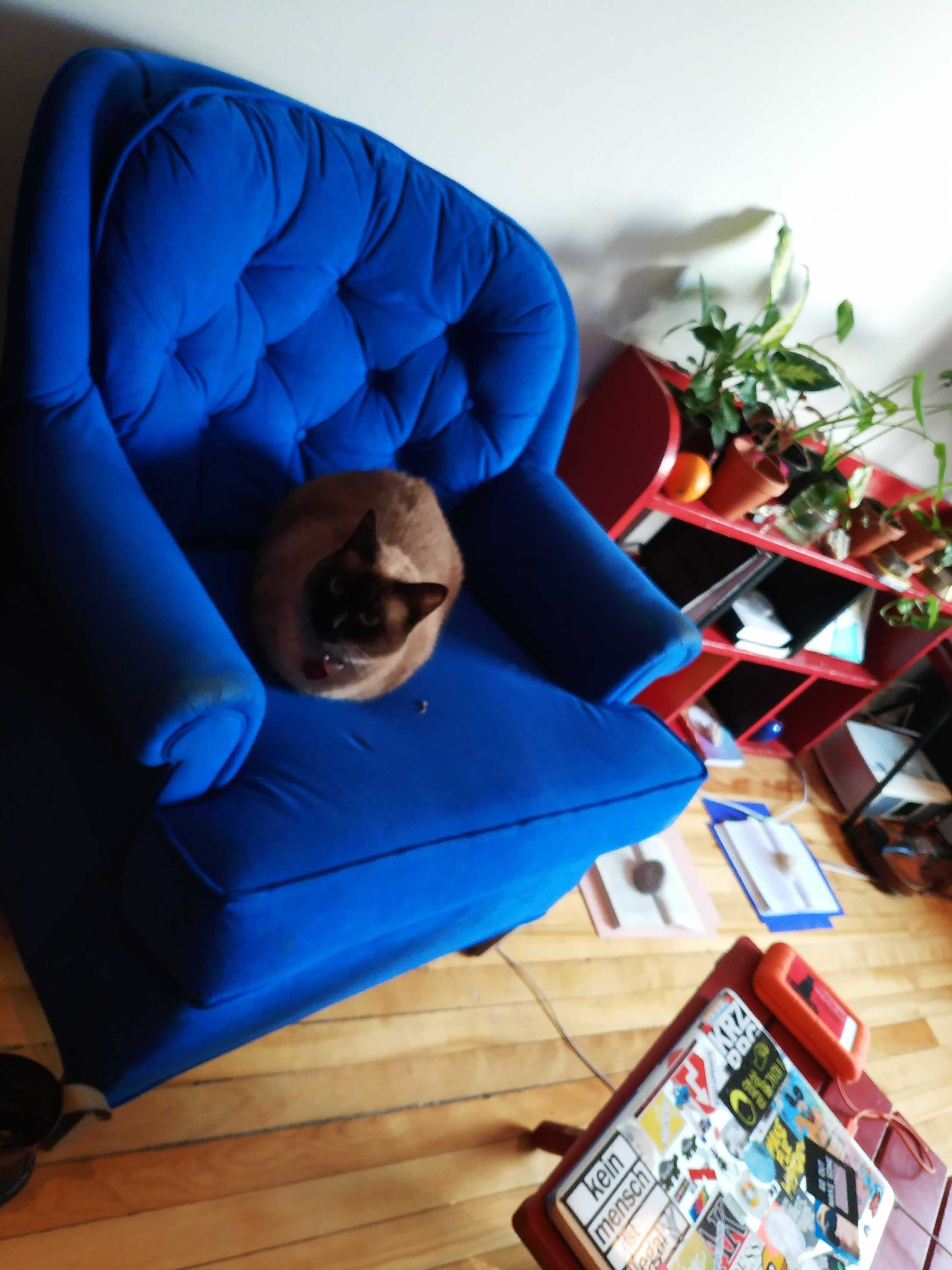
Amplification is what the arena of the parliament of creatures beholds. It is in amplification that tendencies carry on, multiply, and make the space move with their qualities (Manning xx). Interpenetration. It does not stop there, however, because as the unruly space of the wild beyond contains so many creatures, when a tendency is amplified it inevitably crosses other tendencies and their qualities. They start to interpenetrate. Interpenetration means they “effectively mix without getting mixed up” (Massumi 46) That is, tendencies “’interpenetrate’ in a zone of in- discernibility, all the while remaining logically distinct when considered as vectors moving through that zone.” (46) survival yes, this is an arena of exuberance and intensification, but in that also an arena of survival. It is survival in the sense of what makes life live, what allows it to continue in the creative advance to live well, and maybe even better? It involves improvisation continuously, because you never ‘get’ it. Any life that ‘gets’ it is already the dimming down of a life, refraining its own potential … Animal politics: how to write like a rat flicks its tail? How to enter like a cat? How to eat a banana like a fruitbat? How to hang like a capybara? How to chew grapes like a raccoon?
The parliament of creatures is wild, for it is a politics that resides in the wild beyond. (Moten and Harney)
Fabulation: imagination with the event
These creatures that are books, that are texts. That are not merely are meant to be ‘read’, but live lives in wild, rhizomatic ways (don’t Deleuze and Guattari give as first example of the rhizome the book?) How do they move beyond their given form? What happens when that given form starts taking on those movements? Lures for feeling. “i still liked it best when it was swallowed and made purple creature.” “another strange creature, no?” “The lovely sensation when a machine eats your coins without '’properly working'’. "“Oh yes, the water pump works so well, but it drinks a lot of water. Thirsty creature'”
“it is a hang out spot for break-needers (edited) howtoopenadoor [6:12 PM] Save the creature!”
“but maybe that creature needs more for spectral cube tendencies”
““Like, imagine you would say: “you and I” or “the chair and you” but in a way that wouldn’t cling to the common-sense doctrine that Whitehead describes above as self-enduring things. Then perhaps you would say a story for you and a story for I that wouldn’t make them these enduring things but agitated activities. Let’s see. Like, instead of you I’d say something like: ‘circular jumpy cat-like creature’ and for I I’d say something like: ‘stringy cheese summery squeeze’.”
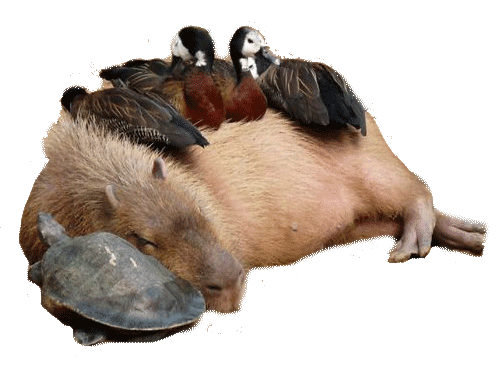
“You may have wondered why do other animals like the capybaras so much? It seems that every animal like hanging out with this friendly creature that looks like a rat-pig hybrid, even crocodiles! The answer probably lies in the fact that capybaras are very social animals who often live in groups of 10-20 individuals. These lovable creatures are the largest rodents in the world, growing to a size of up to 134cm and weighing up to 66kg. Capybaras are native to South America and are semi-aquatic mammals that prefer to live near bodies of water. In fact, they are excellent swimmers and can avoid predators by staying submerged for up to 5 minutes in water. As if that wasn’t enough, they only mate in water. Capybaras seem to be able to make friends with any other living creature, and people aren't quite sure why. Regardless of what the real cause of this friendship-making ability is, the capybaras range of friends is really impressive.” https://youtu.be/6nVKetRKZ0E